Reckoning with Our Past as We Look to the Future
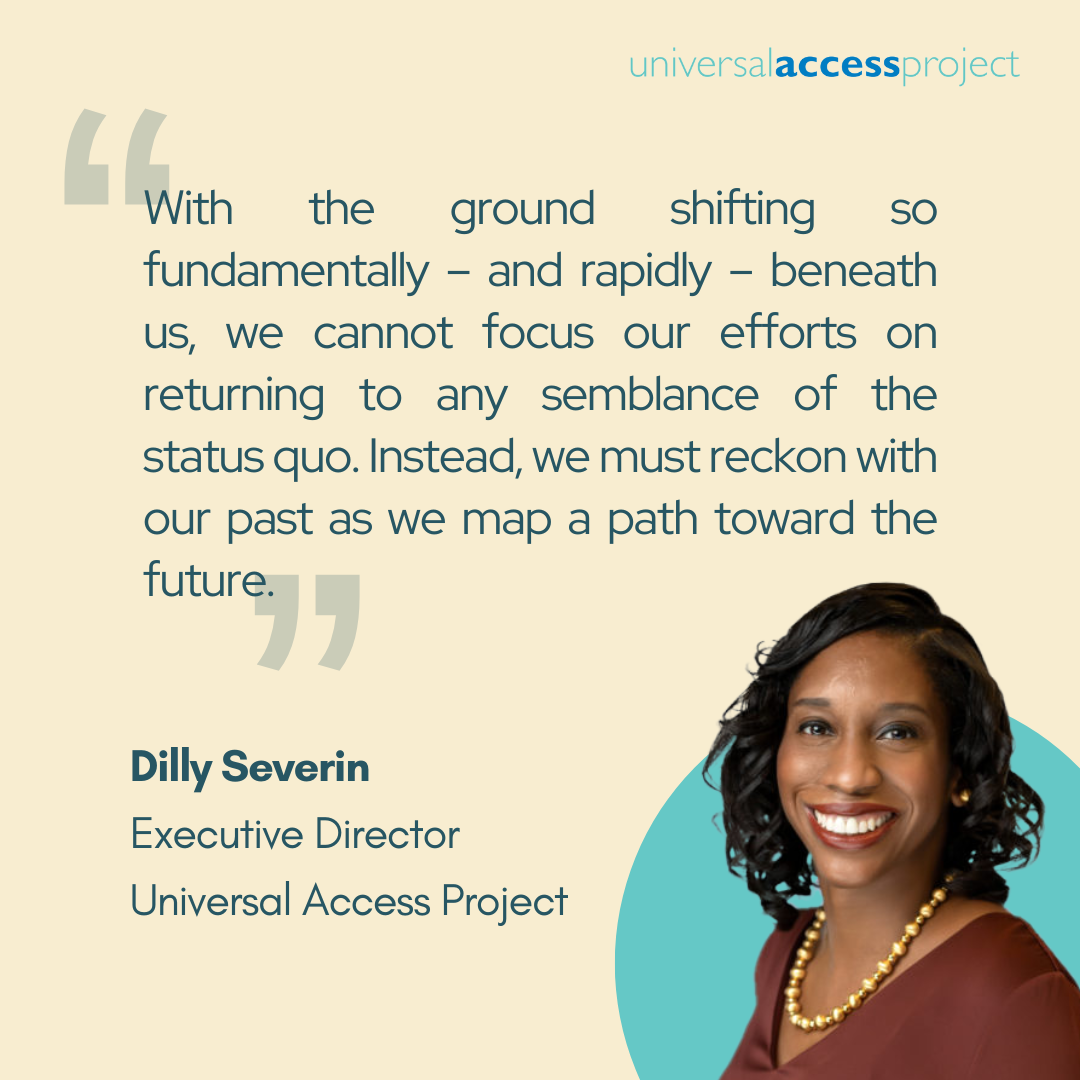
By Dilly Severin, Executive Director, Universal Access Project
This year brought unprecedented shifts to the landscape of U.S. foreign aid, sexual and reproductive health, rights and justice, and global health security. In the shadow of these challenges, I’ve been humbled to be in community with partners across sectors who are all facing a moment of reckoning: Where do we go from here?
As we close out a tumultuous 2025, I am reflecting on three ideas that have been swirling in my mind since I returned from the International Conference on Family Planning last month in Bogotá, Colombia.
These concepts emerged from where I believe we, as a sector, have ceded ground in advancing SRHRJ. They also strike me as clear and actionable opportunities, even in this time where opportunities feel few and far between.
Centering people as individuals and reflecting their agency and autonomy in conversations about human health and rights.
SRHRJ and human health and rights more broadly need to be centered first and foremost on the individual and their wants and preferences. This seems obvious, but it has not always been the case in our sector.
I’m heartened by new research from The Guttmacher Institute, which released the latest version of its long-standing “Adding It Up” report which makes the financial case for meeting the “unmet need” for contraception. In a major shift, the Institute is revisiting the concept of “unmet need” to focus on “unmet demand,” examining not only whether individuals use contraception, but whether they express interest in using it in the future. This important reframe does away with the assumption that all people not currently using modern contraception want to be, or that contraceptive users are satisfied with their options. Instead, it brings a more person-centered measure that resets our baseline knowledge around supply and demand.
As a community, we must apply this same person-centered approach to all that we do: yes, supporting SRHRJ has ripple effects on communities, economies, and more. But at its core, it is about individual choices, preferences and desires; and ensuring people are in the driver’s seat of their own lives.
Engaging the private sector as a holistic partner in advancing SRHRJ.
We have long recognized the benefits of public-private partnerships in health, human rights and resilience. But as a sector, we need to do more to look beyond seeing companies through the narrow lens of manufacturing commodities or providing health insurance. Both roles are essential to ensuring supply meets demand; but there is much more to the equation.
We need to bring companies into conversations about shaping policies, defining best practices, and mobilizing funding for SRHRJ. We need to leverage not only private sector investments but also their vast networks.
Our team at the Universal Access Project has been exploring this work in recent years through several avenues:
Promoting systemic, policy and programmatic advancements in workplace women’s health through our Private Sector Action initiative and its Accountability Platform for NGOs, business, labor groups and others committed to worker health and well-being in global supply chains to advance collective action and change.
Co-creating and co-managing the Resilience Fund for Women in Global Value Chains, a pooled corporate fund that invests in women-led organizations working in supply chain communities to advance women’s health, safety, livelihoods and climate resilience.
Protecting hard-won victories in the context of how the U.S. is reshaping foreign assistance.
The way the U.S. is reimagining foreign assistance no doubt gives this administration leeway to insert harmful policy restrictions into its bilateral compacts with countries in a way that puts “America first” at the detriment of human health, rights and autonomy globally.
And, we must acknowledge that, more broadly, the framework of the bilateral compacts achieves goals that our previous international aid architecture did not: providing multi-year funding to governments in ways that allow them to drive solutions for their countries and communities. Now, we have an opportunity and an imperative to support national partners in shaping their agreements with the U.S. to protect their progress and national sovereignty.
With the ground shifting so fundamentally – and rapidly – beneath us, we cannot focus our efforts on returning to any semblance of the status quo. Instead, we must reckon with our past as we map a path toward the future.
As we close out a turbulent year, I want to lift up the bright spots of UAP’s work in 2025, made possible by the support of our donors and community:
We convened partners on deep advocacy strategy and to speak with press to document harmful policy actions. Together, we held onto precious ground and ensured a drumbeat of informed coverage on our issues. This included reporting in The New York Times (Funding Freeze Decimates Women’s Health Care, U.N. and Others Say), Politico (Trump plans to block funding to groups that promote diversity policies abroad), The Independent (Trump’s aid cuts deny one million women a week access to contraception) and more. We look forward to building on this work in new ways in 2026, including expanding our reach to new media and influencers.
We built bridges with new partners and engaged existing partners in new ways:
We welcomed reinvestments from partners in the Resilience Fund and are excited to bring in new partners for 2026 and launch a new round of trust-based giving to women-led organizations in global supply chain communities.
We strengthened our Accountability Platform and shed new light on women’s health as not just a corporate sustainability metric but a real business risk, alongside actionable steps companies can take to address it; and look forward to welcoming new company commitments to women’s health and well-being in 2026.
Thanks to dedicated advocacy by UAP partners and others, U.S. Senator Jeanne Shaheen and colleagues in the Senate introduced new legislation to restore and safeguard U.S. funding for UNFPA.
We strengthened our work at the intersection of climate resilience and women’s health, including highlighting the role of women-led organizations in fighting climate impacts and beginning work on a new partnership across private sector and civil society stakeholders to address the rising threat of heat stress to women workers globally – more to come as it gets off the ground.
I remain deeply grateful for the community UAP calls home, and for your unwavering support. Wishing you and your loved ones health, happiness and warmth this holiday season and into the New Year.